
Fall Gutter Maintenance for Washington DC Roofs
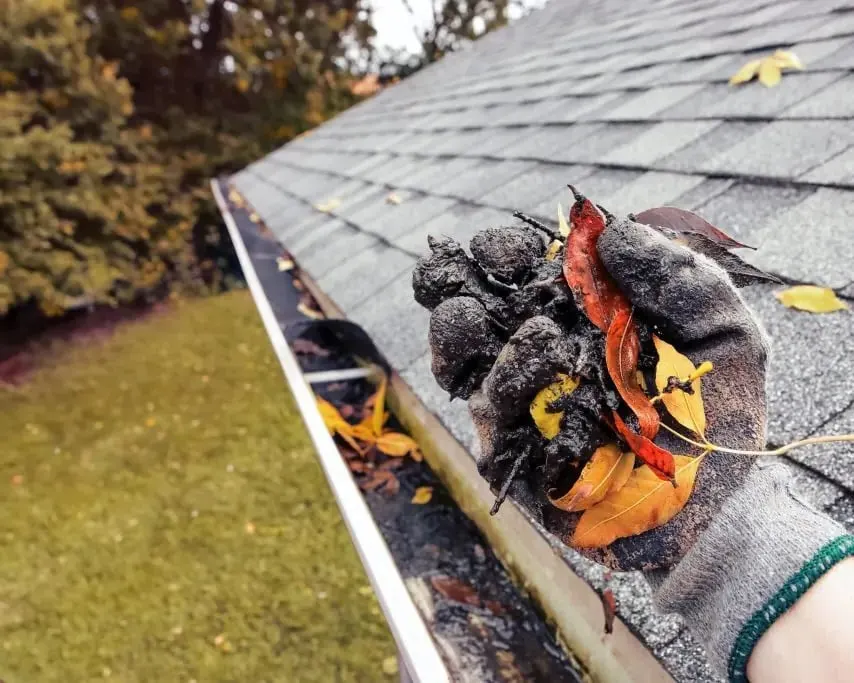
Good gutter maintenance in Washington DC comes down to three things before the leaves drop: clear the gutters, confirm the downspouts move water away from the building, and look for sagging or stains along the roof edge. If you live in Capitol Hill, Hill East or Navy Yard, September is a sensible time to do this check, ahead of the October and November rains. A blocked gutter that sits through a wet autumn can contribute to roof edge damage.
What to check before leaves build up
Start from the ground, or from a ladder that is footed on level, solid surface with someone holding it. Do not walk on the roof. Look along the gutter, the trough that catches roof runoff, for leaves, twigs and shingle grit. Grit looks like coarse sand and tends to collect near downspout openings. A little is normal on an aging shingle roof, but a heavy layer may indicate the gutter is not flushing well.
Here is a quick list to run through on each side of the house:
- Debris sitting in the gutter, especially near corners and downspout openings.
- Sections that sag or pull away from the house, or fasteners that look loose or backed out.
- Water marks, peeling paint or dark staining on the fascia, the board that runs beneath the roof edge and holds the gutter.
- Seams that drip or show rust or cracking.
- Plant growth or seedlings in the gutter, which means debris has been sitting a while.
If the gutters are full or hard to reach, professional gutter cleaning may be safer than stretching from a ladder. Two story rooflines and rowhouse rear additions may be difficult for a homeowner to reach safely.
How to check the drainage path
Clean gutters only help if the water has somewhere to go. A steady rain can help reveal drainage problems. Stand where you can see the roof edge and watch whether water runs over the front lip of the gutter, pours out at a corner, or drips behind the gutter against the fascia. Any of those may indicate the trough is blocked, pitched wrong or pulling away from the house.
Follow the downspout to the ground
A downspout is the vertical pipe that carries water from the gutter to the ground. Check that the outlet at the bottom is not clogged with leaves or packed dirt, and that it discharges away from the foundation or into a proper drain line. Water that pools beside the wall or runs toward a neighbor's wall is a drainage problem even if the gutter above looks clean. A quick way to test is to run a hose into the gutter near the downspout and see whether the flow at the bottom keeps up.
Do not forget gutter guards
Guards are screens or covers that limit how much debris enters the gutter. They help, but they are not maintenance free. Fine debris, shingle grit and matted leaves can still build up on top or underneath. If you have gutter guards installed, look at them after leaf fall and again in late winter, and clear the surface so water can still enter.
Fall and winter conditions in Washington DC
Washington, DC often gets rain in October and November just as leaves come down, which is when a clogged or poorly draining gutter shows itself. Leaves that arrive wet can pack tightly and block the downspout opening. Trees along a street or in a shared courtyard can drop a lot in a short stretch, so a gutter that was clear in early October can be full by Thanksgiving.
DC winters also bring freeze-thaw cycles, where temperatures dip below freezing at night and rise above it during the day. Water trapped in a gutter can freeze, expand and add strain to the gutter, its fasteners and the roof edge. Ice that forms in a blocked downspout can also keep meltwater from draining, so it may back up and spill over. Clearing the path before the first hard freezes may be easier than dealing with it after.
The same checks apply in Capitol Hill, Hill East or Navy Yard. A flat or low slope rear roof, a long run of gutter on a row of attached houses, and a newer building with internal drains each behave differently, so go by what you see during rain rather than by a rule of thumb.
| What you see | Likely cause | Next step |
|---|---|---|
| Water spills over the front edge in rain | Debris buildup or a blocked downspout | Clean the gutter and test the downspout with a hose |
| Water drips behind the gutter | Gutter pulled away or pitched wrong | Have the attachment checked |
| Stains or soft spots on the fascia | Repeated overflow or moisture at the roof edge | Ask a roofer to inspect the fascia and nearby roofing |
| Pooling beside the foundation | Downspout outlet too close or blocked | Clear the outlet and extend the discharge |
When a gutter issue may involve the roof
A single clog may be resolved by cleaning. Repeated overflow after you have cleaned the gutter is a different signal. So are water stains on the fascia or soffit (the underside of the roof overhang), damp areas near the roof edge, or shingles at the eave that look lifted or darkened. Those can point to a gutter that is pulling away, drip edge problems, or moisture getting under the first course of roofing.
If the problem returns after cleaning, ask a roofer to check the gutter attachment and the roofing nearby. Fixing the gutter alone may not resolve the problem if wet fascia or edge shingles are involved, and it may be cheaper to catch that before the wood rots through. We offer roof repair.
After a steady rain, look at your gutters from the ground and write down any overflow, drips or standing water, and where they happened. That note may make a closer inspection faster and more useful.
If you would like someone to look at your gutters and roof edge before the leaves come down, we offer a Free Estimate.
Common questions
When should I clean gutters in the fall in Washington DC?
Consider cleaning after most leaves have dropped but before hard freezes. If trees near your house shed early or heavily, a quick check in late September or October and a second one in late November can keep the downspouts running.
How do I know if my downspout is clogged?
Water that spills over the gutter during rain, or a slow trickle at the bottom of the downspout, usually means a blockage. Running a hose into the gutter near the downspout shows whether flow at the outlet keeps up.
Can clogged gutters damage a roof?
Yes, they can. Standing water can stain or rot the fascia and, in winter, freeze and strain the gutter and roof edge. If overflow keeps coming back after cleaning, have a roofer check the nearby roofing.
Areas we serve
Our services
Have a question about your project? Call (202) 531-6114